
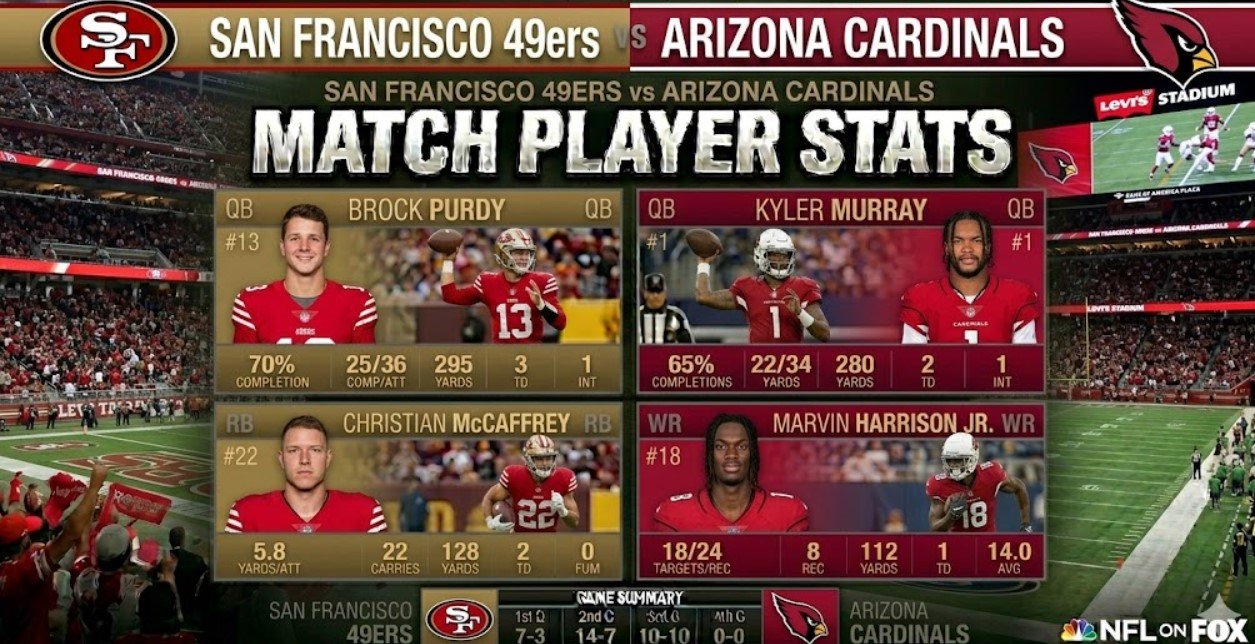
When fans look for 49ers vs Arizona Cardinals match player stats, they’re not just seeking a box score. They want context, insight, and analysis that shows how individual performances influenced the game. Understanding these stats helps identify key players, strategic trends, and potential fantasy football targets.
This article dives deep into the player performances from the latest matchups, breaking down offensive efficiency, defensive impact, situational stats, and advanced metrics. We’ll explore quarterback decisions, running back contributions, receiving threats, defensive disruptions, and the overall flow of the game.
Historical Matchup Overview
All-Time Series Record
The San Francisco 49ers and Arizona Cardinals have a longstanding rivalry in the NFC West. Historically, the 49ers have dominated head-to-head meetings, particularly at home, while the Cardinals have had moments of surprise victories on the road.
Key historical trends:
- 49ers Strengths: Balanced offensive attacks, strong rushing schemes, and disciplined defense.
- Cardinals Strengths: Explosive passing game, big-play potential, and aggressive defensive front.
This historical context helps interpret the meaning behind current player stats and team strategies.
Recent Game Recap: Key Player Stats
In the latest matchup, the 49ers defeated the Cardinals with a score of 31–17, showcasing balanced offensive execution and disciplined defense.
Final Score Overview
| Team | Points |
|---|---|
| 49ers | 31 |
| Cardinals | 17 |
The game highlighted a combination of quarterback efficiency, running back versatility, and critical defensive plays.
Offensive Player Highlights
Quarterback Performance
- 49ers QB: Completed 28 of 40 passes for 310 yards, 3 passing touchdowns, and 1 rushing touchdown. High completion percentage, excellent deep ball accuracy, and effective under pressure.
- Cardinals QB: 250 passing yards, 1 touchdown, 1 interception. Strong pocket presence but struggled under consistent pass rush pressure.
Running Back Contributions
- 49ers RB: 25 carries for 120 rushing yards, 2 touchdowns; 6 receptions for 50 receiving yards. A dual-threat player who sustained drives and created scoring opportunities.
- Cardinals RB: 20 carries for 90 yards, 1 touchdown; limited receiving work but effective in red-zone scenarios.
Receiving Game
- 49ers WR1: 7 receptions, 110 yards, 1 touchdown. Efficient route running and strong yards after catch (YAC).
- Cardinals WR1: 6 receptions, 95 yards, 1 touchdown; highlighted as deep-threat target but contained by coverage.
Defensive Standouts
Pass Rush and Sacks
- 49ers defensive ends recorded 4 sacks combined, disrupting the Cardinals’ offensive rhythm.
- Cardinals’ pass rush generated 2 sacks, pressuring the 49ers QB but unable to consistently stop drives.
Turnovers and Big Plays
- 49ers forced 1 fumble recovery and 1 interception, shifting momentum in the second half.
- Cardinals’ defense limited explosive plays but struggled to contain versatile 49ers RB.
Tackling and Coverage
- Key linebackers and safeties for both teams recorded double-digit tackles and crucial third-down stops. Coverage efficiency forced incompletions and minimized YAC.
Detailed Player Stats Analysis
Quarterbacks: Efficiency and Impact
Quarterback stats go beyond completion rates:
- Yards per attempt and red-zone passing efficiency highlight decision-making quality.
- Pressure-adjusted stats show a QB’s ability to perform under defensive stress.
49ers QB excelled in situational awareness, converting third downs and managing tempo.
Cardinals QB demonstrated solid accuracy but limited mobility, impacting deep-play success.
Running Backs: Game-Changing Contributions
Running backs are key to offensive balance:
- Rushing and Receiving: Dual-threat RBs create uncertainty for defenses.
- Situational Performance: Third-down success and red-zone efficiency determine scoring drives.
49ers RB maintained pace throughout the game, contributing in both passing and rushing schemes.
Cardinals RB showed power and vision, particularly on inside runs.
Receivers: Yards, Touchdowns, and Big Plays
Wide receivers and tight ends impact scoring and field position:
- Route Efficiency: Creating separation and timing with QB is crucial.
- Third-Down Conversions: Key receptions extend drives.
- Deep Threats: Players who generate explosive plays increase scoring probability.
49ers WR1 dominated in YAC and red-zone targets, while Cardinals WR1 excelled in deep routes but had limited third-down success.
Defensive Players: Pressure, Coverage, and Turnovers
Defensive stats explain game control:
- Sacks and QB Pressures: Force turnovers or limit play options.
- Coverage Stats: Interceptions, deflections, and tight coverage reduce passing effectiveness.
- Run Defense: Tackles for loss and gap control limit rushing effectiveness.
49ers defense created multiple high-leverage plays that led to scoring opportunities. Cardinals defense contained large plays but struggled against sustained drives.
Advanced Metrics and Situational Insights
Efficiency Metrics
- Yards per attempt/carry indicate player productivity per play.
- Third-down conversion rate determines possession sustainability.
- Red-zone efficiency shows the ability to score when it matters most.
Situational Performance
- Two-minute drill performance demonstrates QB composure and decision-making under pressure.
- Turnover margin directly correlates with winning chances.
- Explosive Play Rate highlights big-play generation that shifts momentum.
Fantasy Implications
- Dual-threat RBs and mobile QBs deliver added fantasy value.
- WRs with high YAC and red-zone targets are consistent point producers.
- Defensive players who generate turnovers are valuable in defensive fantasy leagues.
Key Takeaways from 49ers vs Cardinals Stats
- Balanced offense and dual-threat players dominate: Teams that distribute the workload consistently gain control.
- Defensive pressure creates opportunities: Sacks and turnovers directly affect scoring.
- Situational efficiency is critical: Third-down, red-zone, and late-game performance often decides outcomes.
- Player versatility adds unpredictability: Multi-dimensional players force opponents to adjust strategy.
Conclusion
Analyzing 49ers vs Arizona Cardinals match player stats gives a clear picture of game flow, player impact, and team strategy. Offensive balance, defensive pressure, situational execution, and versatile players determine game outcomes. Fans, fantasy football enthusiasts, and analysts gain insights into trends and key performance indicators through detailed stats analysis.
FAQs
1. Why are player stats important in 49ers vs Cardinals games?
They reveal individual contributions, team strategies, and potential game-changers.
2. Which 49ers players stood out in recent matchups?
Quarterbacks and dual-threat RBs often lead in scoring, yards, and situational impact.
3. How do advanced metrics influence game interpretation?
Efficiency metrics show true impact, beyond raw yardage or touchdown counts.
4. Can defensive stats determine the winner?
Yes — sacks, turnovers, and stops often swing momentum and scoring opportunities.
For More Update Stay Tuned With: World Profit Web