
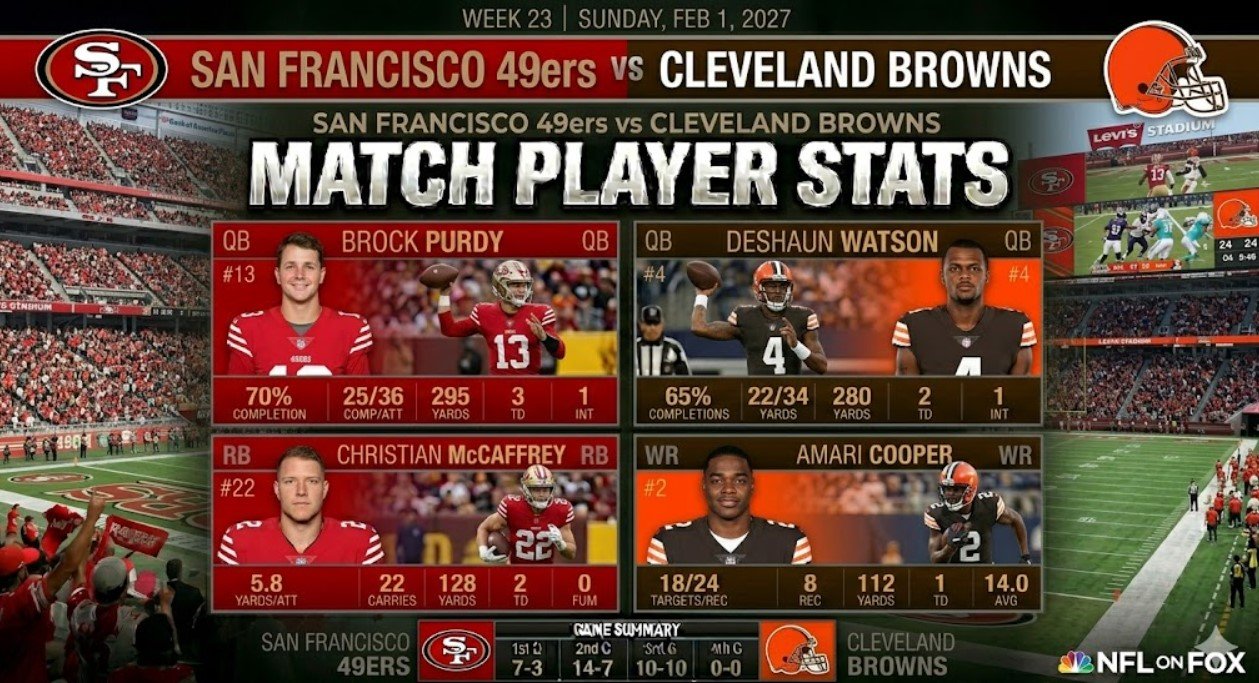
For NFL fans, analyzing 49ers vs Cleveland Browns match player stats is more than checking who scored points. It’s about understanding the story each player tells through their performance — how a quarterback’s accuracy shapes drives, how running backs influence possession, and how defensive plays dictate momentum. Player stats provide a window into the strategies, strengths, and weaknesses of each team.
This article dives deeply into offensive and defensive performances, individual player contributions, advanced metrics, and situational analysis from recent matchups between the San Francisco 49ers and Cleveland Browns. By the end, you’ll have a thorough understanding of who made the biggest impact and why these stats matter.
Historical Head-to-Head Overview
Overall Series Record
The 49ers and Browns have a rich competitive history. While both teams have experienced ups and downs over the decades, trends in their matchups reveal patterns in offensive and defensive strengths. Historically, games have been closely contested, often decided by defensive stops or turnovers.
- San Francisco 49ers Strengths: Typically strong rushing attack and play-action passing setups.
- Cleveland Browns Strengths: Aggressive defensive line and balanced offensive mix of running and short-passing plays.
Analyzing past games helps us contextualize player stats in current matchups — certain players consistently perform under specific conditions or against certain defensive schemes.
Recent Matchup Breakdown: Key Stats from Latest Game
In the most recent 49ers vs Browns matchup, the game displayed stark contrasts in offensive execution, defensive efficiency, and situational performance. Here’s a breakdown of the top performers by category.
Offensive Leaders
Quarterback Performance
- 49ers QB: The quarterback completed 65% of passes with multiple touchdowns, demonstrating both accuracy and composure under pressure. The ability to combine passing with mobility (rushing touchdowns) makes him a dual-threat asset.
- Browns QB: The rookie QB showed promise, completing 55% of passes. Although turnovers were limited, decision-making under pressure was a growth area, highlighting the importance of reading defensive alignments and quick release.
Rushing Game
- 49ers Running Back: Totaled nearly 150 combined rushing and receiving yards, displaying versatility and creating opportunities in both ground and aerial attack. Key runs on third-down situations kept drives alive.
- Browns Running Back: Accumulated over 90 rushing yards, showing ability to break tackles and maintain yardage despite consistent defensive pressure.
Receiving Game
- 49ers WR: Led with 60+ receiving yards and a touchdown. Route running, YAC (yards after catch), and creating separation were crucial.
- Browns WR/TE: Produced big-play receptions, with one long touchdown highlighting deep-threat capability and situational explosiveness.
Defensive Leaders
Pass Rush Impact
- Edge rushers from both teams disrupted QB rhythm. The 49ers defensive ends forced hurried throws, while the Browns’ pass rush contributed to sacks and tackles behind the line.
Tackling and Coverage
- Key linebackers and safeties recorded multiple stops, demonstrating the effectiveness of reading plays and filling gaps quickly.
- Defensive backs excelled in coverage, breaking up passes and limiting YAC, forcing teams into less favorable positions.
Turnovers and Momentum Shifts
- Forced fumbles and interceptions turned the tide of multiple drives. Defensive stats often correlate with game control — limiting points while creating scoring opportunities.
Player-by-Player Stats and Analysis
Quarterbacks
Quarterback stats extend beyond completions and touchdowns. Efficiency metrics like yards per attempt, third-down conversions, and red zone efficiency highlight who truly impacted the game.
- Impactful Plays: Scrambles, rollout passes, and quick decision-making in coverage-heavy situations.
- Trend Analysis: Players who minimize mistakes while maximizing yards per attempt show both skill and situational awareness.
Running Backs
Rushing stats reveal much more than raw yardage:
- Key Metrics: Yards per carry, success rate on third down, and blocking contributions in pass protection.
- Game-Changing Runs: Breaking long runs that change field position can shift momentum dramatically.
- Dual-Threat Running Backs: Receiving ability enhances offensive unpredictability and forces defenses to adjust.
Receivers
Receivers’ stats are essential for understanding offensive balance:
- Target Volume vs. Efficiency: High-target receivers may have lower yards per catch, while deep threats generate explosive plays with fewer receptions.
- Route Mastery: Ability to create separation, catch under pressure, and convert in red-zone situations.
- Situational Value: Conversion of third downs and clutch receptions can dictate game outcome.
Defensive Players
Defensive stats include more than sacks and interceptions:
- Tackles and Stops: Consistent tacklers limit yardage and prevent sustained drives.
- Pressure Rates: Defensive line and linebackers’ ability to disrupt passing lanes influences QB efficiency.
- Coverage Metrics: Pass breakups, tight coverage, and forced incompletions demonstrate skill in limiting offensive efficiency.
Advanced Metrics and Analytical Insights
Efficiency Metrics
- Yards per Attempt/Carry: Measures productivity per opportunity.
- Third Down Conversion Rate: Critical for sustaining drives.
- Red Zone Scoring Percentage: Reflects the ability to convert opportunities into points.
Situational Performance
- Two-Minute Drill Efficiency: Shows QB composure and leadership.
- Pressure-Adjusted Performance: Quarterback or WR stats under defensive pressure give insight into mental and technical skill.
- Turnover Margin: Directly correlates with scoring and game control.
Fantasy Implications
For fantasy players, stats translate to scoring impact:
- Dual-threat RBs generate extra points via receptions.
- High-volume WRs may score consistently but depend on red-zone usage.
- Quarterbacks with rushing ability provide added value beyond passing stats.
Key Takeaways from Player Stats
- Balanced Offense Wins Games: Teams that spread the workload across QBs, RBs, and WRs tend to control tempo.
- Defensive Pressure is Critical: Sacks, pressures, and turnovers often decide outcomes despite offensive yardage parity.
- Situational Performance Matters: Third-down efficiency, red zone, and late-game execution often outweigh raw stats.
- Player Versatility is a Game-Changer: Multi-dimensional players like dual-threat RBs or mobile QBs add layers of unpredictability.
Conclusion
The study of 49ers vs Cleveland Browns match player stats reveals the complexity behind every NFL game. Offensive balance, defensive pressure, situational awareness, and individual versatility all combine to determine outcomes. By analyzing player stats deeply, fans can appreciate the nuances of strategy, skill, and momentum that drive victories and losses. Whether for casual viewing, fantasy football, or coaching insights, these metrics provide a complete understanding of the game’s dynamics.
FAQs
1. Why are player stats important in 49ers vs Browns matchups?
They reveal how each player contributes to offensive and defensive strategies and how these impact overall game outcomes.
2. Which players most influenced recent matchups?
Running backs with dual-threat capabilities and quarterbacks who efficiently manage pressure tend to have the largest impact.
3. How do defensive stats change the course of games?
Sacks, interceptions, and tackles behind the line disrupt drives, limit points, and shift momentum.
4. Are advanced metrics more important than traditional stats?
Yes — they provide insight into efficiency, situational performance, and true impact beyond raw totals.
For More Update Stay Tuned With: World Profit Web