
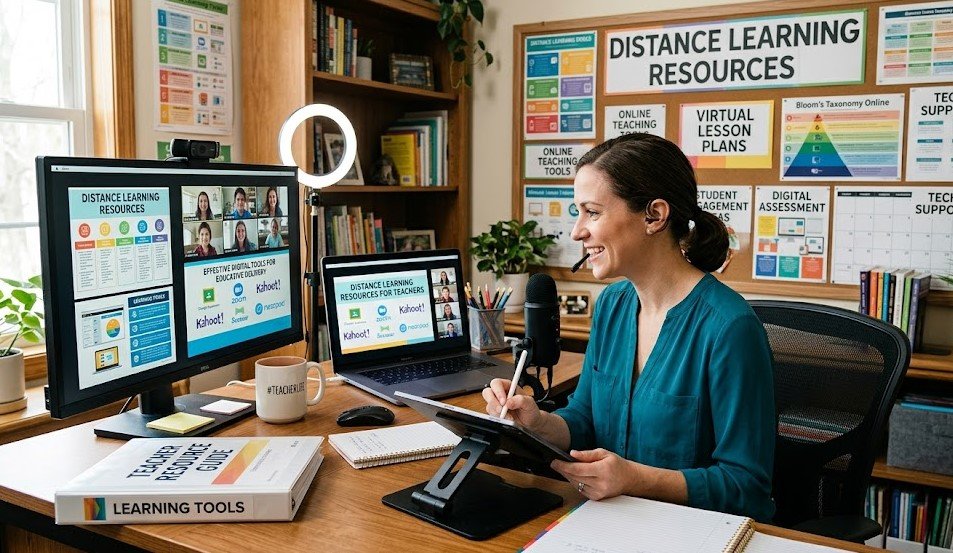
The importance of distance learning resources for teachers has increased significantly as education continues shifting toward digital and hybrid learning environments. Modern classrooms are no longer limited to physical spaces because teachers now use online platforms, virtual assignments, educational apps, and video conferencing tools to teach students from anywhere. These resources help educators maintain lesson quality, improve communication, and provide flexible learning opportunities for students with different learning needs. In many schools, distance learning tools have become essential for continuing education during emergencies, supporting remote students, and expanding access to educational content beyond traditional classrooms. Teachers who effectively use digital resources can create more engaging lessons, track student progress more accurately, and encourage collaboration through interactive online activities.
Best Online Platforms for Remote Teaching
Choosing the right platform is one of the most important steps in successful online education because teachers need systems that are easy to manage, reliable, and accessible for students. Popular remote teaching platforms such as Google Classroom, Zoom, Microsoft Teams, Moodle, and Canvas allow educators to organize assignments, share study materials, conduct live classes, and communicate with students in real time. These platforms also support features like attendance tracking, grading systems, file sharing, and collaborative discussions, which help teachers maintain structure in virtual classrooms. Many schools prefer these tools because they work across different devices and provide secure environments for both teachers and students.
Another major advantage of modern remote teaching platforms is their ability to support interactive and personalized learning experiences. Teachers can record lessons, create quizzes, hold breakout room discussions, and integrate third-party educational applications that make lessons more engaging. Platforms like Google Classroom simplify assignment management, while Zoom and Microsoft Teams improve live communication and group learning. Moodle and Canvas are often used by universities and institutions because they offer advanced learning management features and detailed performance tracking. By selecting the right platform based on classroom needs, teachers can improve student participation, reduce confusion, and create a more effective online learning environment.
Digital Classroom Tools That Improve Student Engagement
Student engagement is one of the biggest challenges in online education, which is why teachers often rely on interactive digital classroom tools to keep learners focused and involved during lessons. Tools such as Kahoot, Quizizz, Nearpod, Padlet, and Mentimeter help transform traditional online classes into more interactive experiences through quizzes, live polls, educational games, and collaborative activities. These tools encourage participation because students can respond instantly, compete in learning challenges, and share ideas in real time. Interactive features also help teachers identify which students understand the lesson and which may require additional support.
Digital engagement tools are especially useful for maintaining attention during long virtual classes where students can easily lose focus. Many teachers combine video lessons with quizzes, visual presentations, and group discussions to create a more dynamic learning environment. Platforms like Nearpod allow teachers to integrate videos, slides, and assessments into one lesson, while Padlet gives students a shared space to post answers, ideas, and project work. Educational gaming platforms such as Kahoot and Quizizz make learning more enjoyable by turning assessments into competitive activities. When used effectively, these tools improve communication, increase student confidence, and help create a more active and collaborative online classroom experience.
Free Distance Learning Resources for Teachers
Many educators search for free and reliable teaching materials because school budgets and classroom resources can often be limited. Fortunately, there are many high-quality distance learning resources for teachers available at no cost. Websites like Khan Academy, PBS LearningMedia, Common Sense Education, Scholastic Learn at Home, and CK-12 provide free lesson plans, worksheets, educational videos, quizzes, and interactive learning materials for different grade levels and subjects. These platforms help teachers save preparation time while still delivering informative and engaging lessons to students in remote learning environments.
Free educational resources are also valuable because they make online teaching more accessible for schools and teachers around the world. Teachers can use these materials to support independent learning, homework assignments, classroom discussions, and exam preparation without requiring students to purchase expensive textbooks or software. Many free platforms regularly update their content to align with current educational standards and modern teaching strategies. In addition, some websites offer teacher training guides, digital safety lessons, and classroom management tips that help educators improve their online teaching skills. By combining multiple free resources, teachers can create a flexible and effective virtual learning experience that supports student success and continuous learning.
Tips for Managing an Effective Virtual Classroom
Managing a virtual classroom successfully requires strong communication, organization, and consistency because online learning environments can easily become distracting for students. Teachers should begin by setting clear classroom rules, schedules, and expectations so students understand how assignments, participation, and attendance will work. Creating a structured routine helps students stay organized and reduces confusion during remote learning sessions. Many educators also use weekly lesson plans, digital calendars, and reminder notifications to keep students informed about upcoming activities and deadlines. Consistent communication with both students and parents can improve accountability and help solve learning challenges more quickly.
Another important strategy for effective virtual classroom management is maintaining student interaction and motivation throughout lessons. Teachers can improve engagement by using short learning activities, live discussions, visual presentations, and collaborative group tasks instead of relying only on long lectures. Encouraging students to ask questions and participate in online discussions helps create a more active learning environment. It is also helpful for teachers to provide regular feedback on assignments and recognize student achievements to build confidence and motivation. By combining organization, communication, and interactive teaching methods, educators can create a productive online classroom that supports better learning outcomes and stronger student participation.
Common Challenges Teachers Face in Online Learning
Online education offers flexibility and convenience, but it also creates several challenges for teachers who must adapt traditional teaching methods to digital environments. One of the most common problems is maintaining student attention during virtual classes because distractions at home can reduce focus and participation. Teachers may also struggle with limited student interaction, delayed responses, and difficulties in monitoring academic honesty during online assessments. In some cases, students face internet connectivity issues or lack access to proper devices, making it harder for educators to provide equal learning opportunities for everyone in the class.
Another major challenge involves balancing technology with effective teaching practices. Teachers often need additional training to use digital tools, manage virtual classrooms, and troubleshoot technical problems during live sessions. Preparing online lessons can also take more time than traditional classroom teaching because educators must organize digital materials, create interactive content, and communicate regularly with students through multiple platforms. In addition, some teachers experience difficulty building strong personal connections with students in remote settings, which can affect motivation and classroom participation. Despite these obstacles, many educators continue improving their online teaching methods by using better digital resources, communication strategies, and flexible learning approaches.
How Schools and Educators Can Improve Remote Learning Outcomes
Improving remote learning outcomes requires a coordinated effort between schools, teachers, students, and parents to ensure that online education is effective and inclusive. Schools can start by providing proper training programs for teachers so they become more confident in using digital tools and managing virtual classrooms. Investing in reliable learning management systems and ensuring students have access to devices and internet connectivity is also essential. When institutions create a strong digital infrastructure, teachers can focus more on teaching and less on technical issues. Clear policies, structured curricula, and consistent communication across all levels help maintain quality education in remote settings.
Educators also play a key role in improving learning outcomes by adopting student-centered teaching strategies and using a variety of interactive methods. Combining video lessons, quizzes, group discussions, and project-based learning can make online education more engaging and effective. Regular feedback, personalized support, and continuous assessment help identify student weaknesses early and improve academic performance. Schools that encourage collaboration between teachers and parents often see better student engagement and discipline in virtual classrooms. By strengthening both technological support and teaching strategies, institutions can significantly enhance the overall success of distance learning programs.
Conclusion
The growing importance of distance learning resources for teachers has transformed the way education is delivered in modern classrooms. With the help of digital platforms, interactive tools, and free online teaching materials, educators can now create flexible and engaging learning experiences for students regardless of location. While online teaching comes with challenges such as limited interaction and technical issues, effective planning, proper training, and the right use of technology can significantly improve learning outcomes. Schools and teachers who embrace digital education strategies are better equipped to support student success in an increasingly connected world.
Overall, distance learning is not just a temporary solution but a long-term evolution in education. By continuously improving teaching methods and adopting innovative digital resources, educators can ensure that students receive quality education in any learning environment.
FAQs
1. What are distance learning resources for teachers?
They are online tools, platforms, and materials that help teachers deliver lessons, manage classrooms, and engage students remotely.
2. Which platforms are best for online teaching?
Popular platforms include Google Classroom, Zoom, Microsoft Teams, Moodle, and Canvas.
3. Are there free distance learning resources available?
Yes, websites like Khan Academy, PBS LearningMedia, and Common Sense Education offer free teaching materials.
4. How can teachers improve student engagement online?
By using interactive tools like quizzes, polls, group discussions, and multimedia lessons.
For More Update Stay Tuned With: World Profit Web